
Posted on Oct 09, 2026 in India Discovery,Student Speak
1 Comment
Taj Mahal is one of the Seven Wonders of the World. Made up of ivory-white marble, the monument was authorised by Shah Jahan in 1631 as a testament to his love for Mumtaz Mahal. They had fourteen children together, but only seven survived to adulthood (four sons and three daughters).
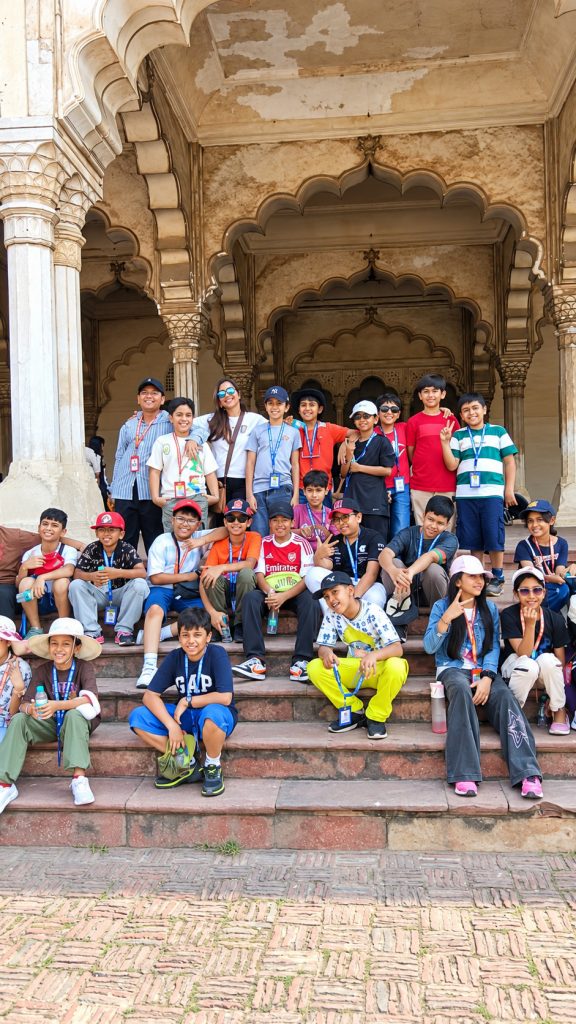
Situated on the bank of the river Yamuna in Agra, Uttar Pradesh, the Taj Mahal took twenty-two years to complete. Each of the twenty-two small domes (chhatris) on the main entrance (Darwaza-i-Rauza) represents one year of the monument’s construction. The four tall towers, or minarets, around the Taj Mahal are cleverly tilted outward to safeguard it from the damage caused by earthquakes.
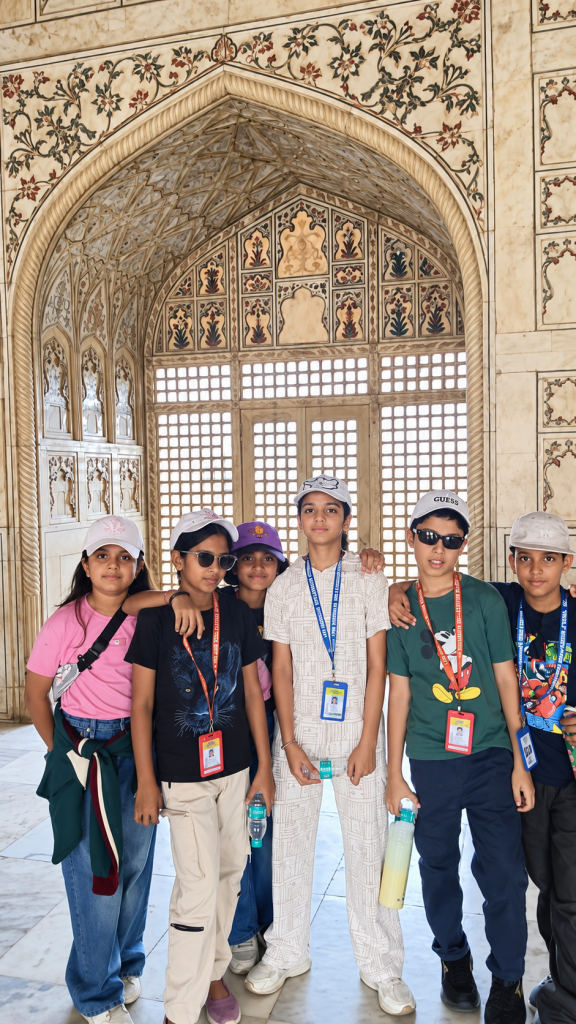
The Taj Mahal is a celebrated property, also known as the ‘Jewel of Muslim Art’ in India. Shah Jahan drew inspiration from Indo-Islamic architecture, combining Persian, Islamic, and Indian elements. Thousands of artisans worked for years to complete this engineering marvel. Some of those famous workers were: Ismail Afandi (the Dome Man), Muhammad Hanif (the Master Mason), and Amanat Khan (the Master Calligrapher). The amount of money spent was around 32 to 70 million rupees in the 1600s (which equals around 35 to 70 billion INR in modern value). Important leaders from all around the world, including U.S. President Donald Trump in February 2020, have visited this world-famous site.
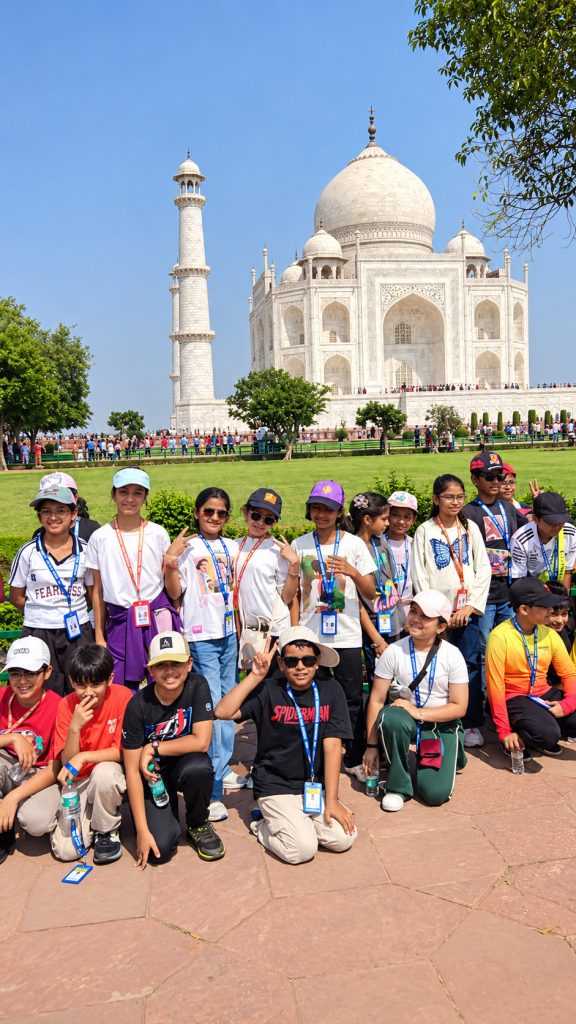
Through this visit to Agra, we learnt about our rich history and architecture, and other monuments built by the Mughals all over India.
For queries call +91-11-48885800 or visit EdTerra Browse Journeys page to know more about the programs for school students. Visit our FB page by clicking HERE. Also, check our podcast page by clicking HERE.

Taj Mahal is one...

Situated in the deep...

Jim Corbett National Park,...

Have you ever felt...
Dharamshala, a hill station...

Have you ever visited...

Mukteshwar is a tranquil...
Jaipur, the “Pink City”...

Our school trip to...
Perched high on a...

See What Our Edventurers Experience!