
Posted on Dec 20, 2025 in India Discovery,Student Speak
1 Comment

Imagine a clock that doesn’t need batteries, yet tells time more accurately than your wrist watch! This is what awaited us at the Jantar Mantar in Jaipur, home to the world’s largest stone sundial. Jantar Mantar in Jaipur is a fascinating place where science, history, and architecture come together. It was built in the early 18th century by Maharaja Sawai Jai Singh II, who had a deep interest in astronomy and mathematics. He wanted to study the movement of celestial bodies and improve the accuracy of timekeeping. The observatory is made entirely of stone and marble. We were amazed to see that it was still well preserved to the present day.
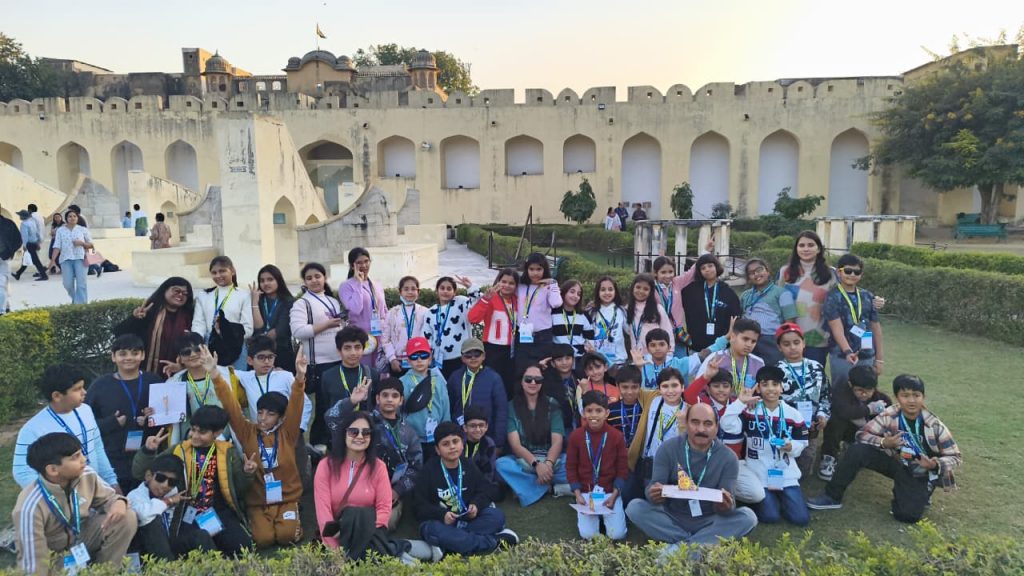
One of the most famous instruments at Jantar Mantar is the Samrat Yantra, the largest sundial in the world. It stands tall and casts a shadow that moves with the sun, allowing time to be measured with amazing accuracy of up to two seconds. As the sun moves across the sky, the shadow slowly shifts, making it possible to read the local time. Watching this process made us feel connected to ancient science.
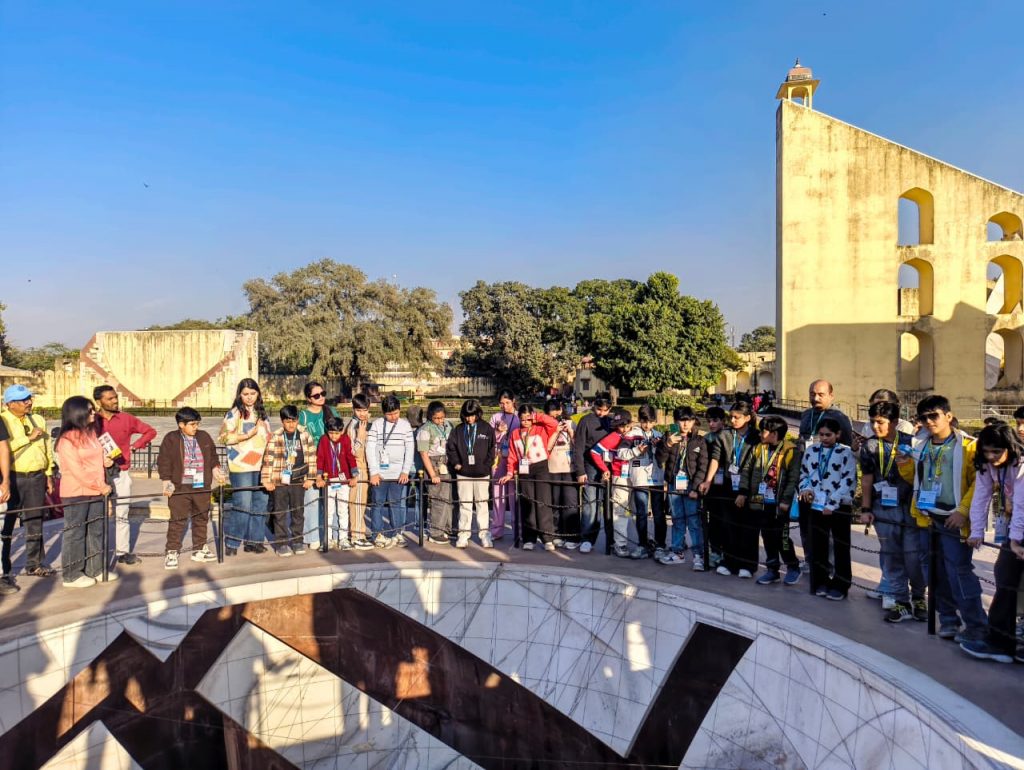
Jantar Mantar is a remarkable example of India’s scientific heritage. It showed us how ancient astronomers understood time and space without modern technology. Visiting Jantar Mantar helped us appreciate the intelligence, curiosity, and creativity of people from the past. We understood that it was not just a historical monument but also a place of learning and wonder for students and travellers alike.
On our visit to...

After an eight-hour-long bus...

During our educational journey...

Constructed in red sandstone...

Our visit to the...

India is home to...

Our educational and fun...

Mysore Palace, also called...

This blog is about...

Ranthambore, known for its...

See What Our Edventurers Experience!