
Posted on Mar 19, 2026 in India Discovery,Student Speak
1 Comment

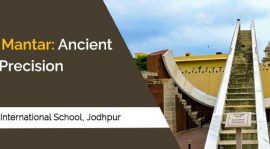
Welcome everybody! Have you ever wondered how people kept track of time without clocks? This is exactly what we discovered at the Jantar Mantar in Jaipur, home to the world’s largest stone sundial.
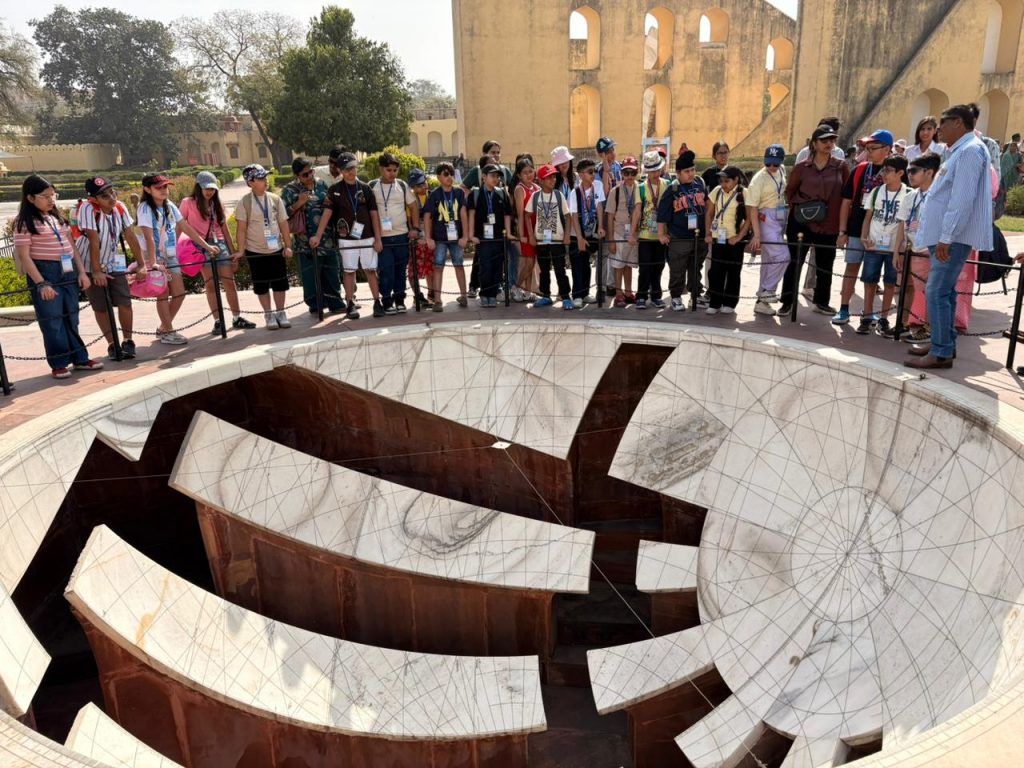
The Jantar Mantar is an extraordinary observatory built by Maharaja Sawai Jai Singh II between 1724 and 1735. He was not only a great ruler but also an astronomer and mathematician who wanted to improve the accuracy of timekeeping and study celestial movements. He built five Jantar Mantars across North India, in cities like Delhi, Varanasi, Ujjain, Mathura, and Jaipur. We learnt that the instruments at Jaipur’s Jantar Mantar can measure time, track stars, and predict astronomical events. We were amazed to see a giant stone sundial at Jantar Mantar, the Samrat Yantra, which stands about 90 feet tall and can tell time with an accuracy of about two seconds.
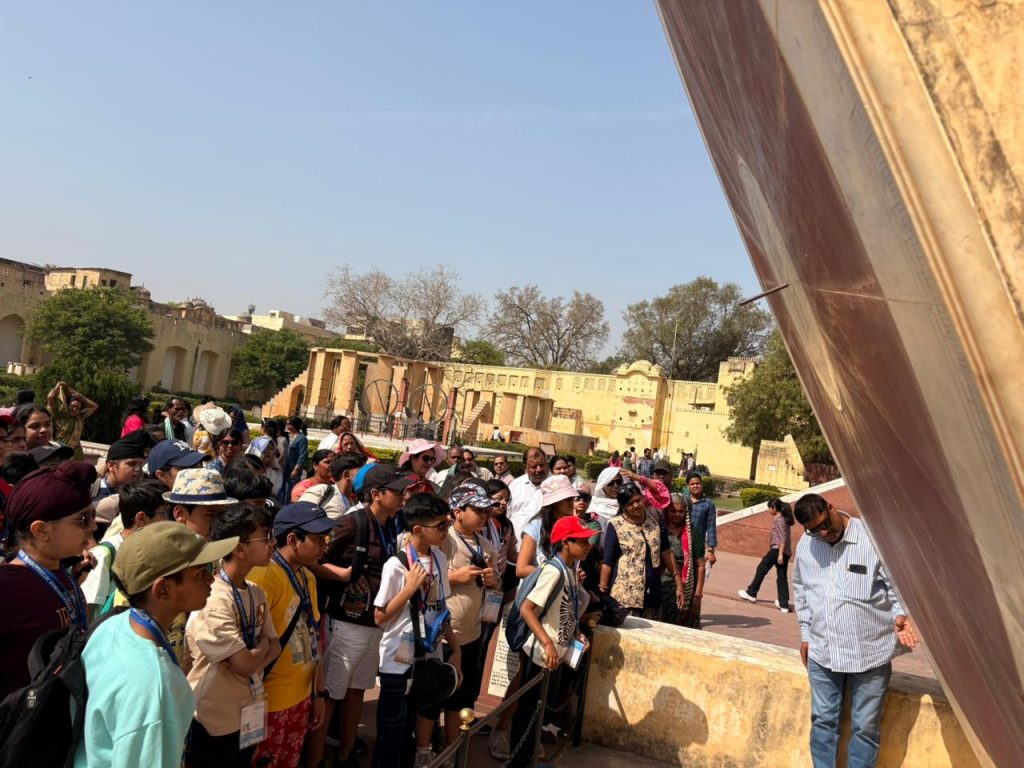
We also learnt that the larger the sundial, the more accurate the time it measures. Some other instruments we saw included the Niyati Yantra and a moon dial, named the Chandra Yantra. We admired these massive instruments, built using stone and marble, which still function today. Jaipur’s Jantar Mantar was declared a UNESCO World Heritage Site in 2010.
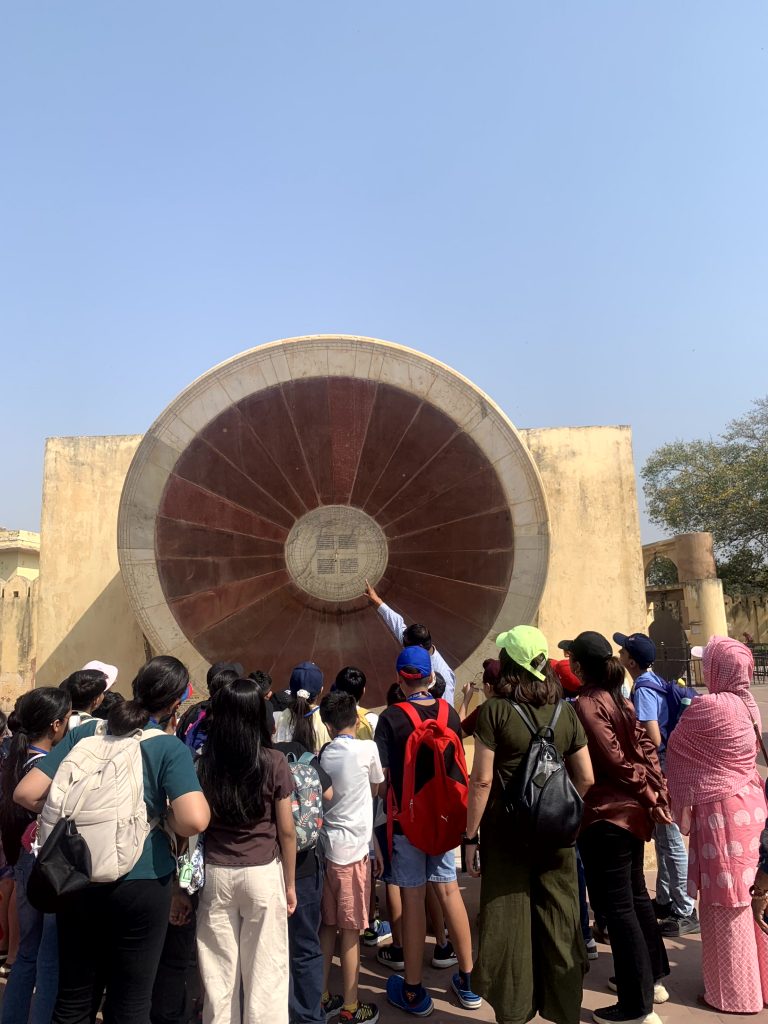
As we explored the site, we realised that it is not just a tourist attraction, but a place where science, history, and architecture come together, reflecting India’s rich knowledge and heritage.
For queries call +91-11-48885800 or visit EdTerra Browse Journeys page to know more about the programs for school students. Visit our FB page by clicking HERE. Also, check our podcast page by clicking HERE.

We all know that...
Welcome everybody! Have you...

We, the students of...

Our school trip to...

Right at 2:00 pm,...
On our visit to...

After an eight-hour-long bus...

During our educational journey...

Constructed in red sandstone...

Our visit to the...

See What Our Edventurers Experience!